

Introduction
Unique in Europe, the Museum of the War of 1870 and the Annexation, located in Gravelotte, is an essential place to discover the history of the Franco-Prussian War and its consequences for the territory. Through a permanent 900m2 route, ranging from historical objects to maps and period documents, immerse yourself in the daily life of soldiers and civilians during this conflict. The museum also highlights the annexation of Alsace-Moselle by the German Empire, a period marked by major political and social upheavals. A poignant place of memory, essential for understanding a crucial turning point in the history of France and Europe.
The events
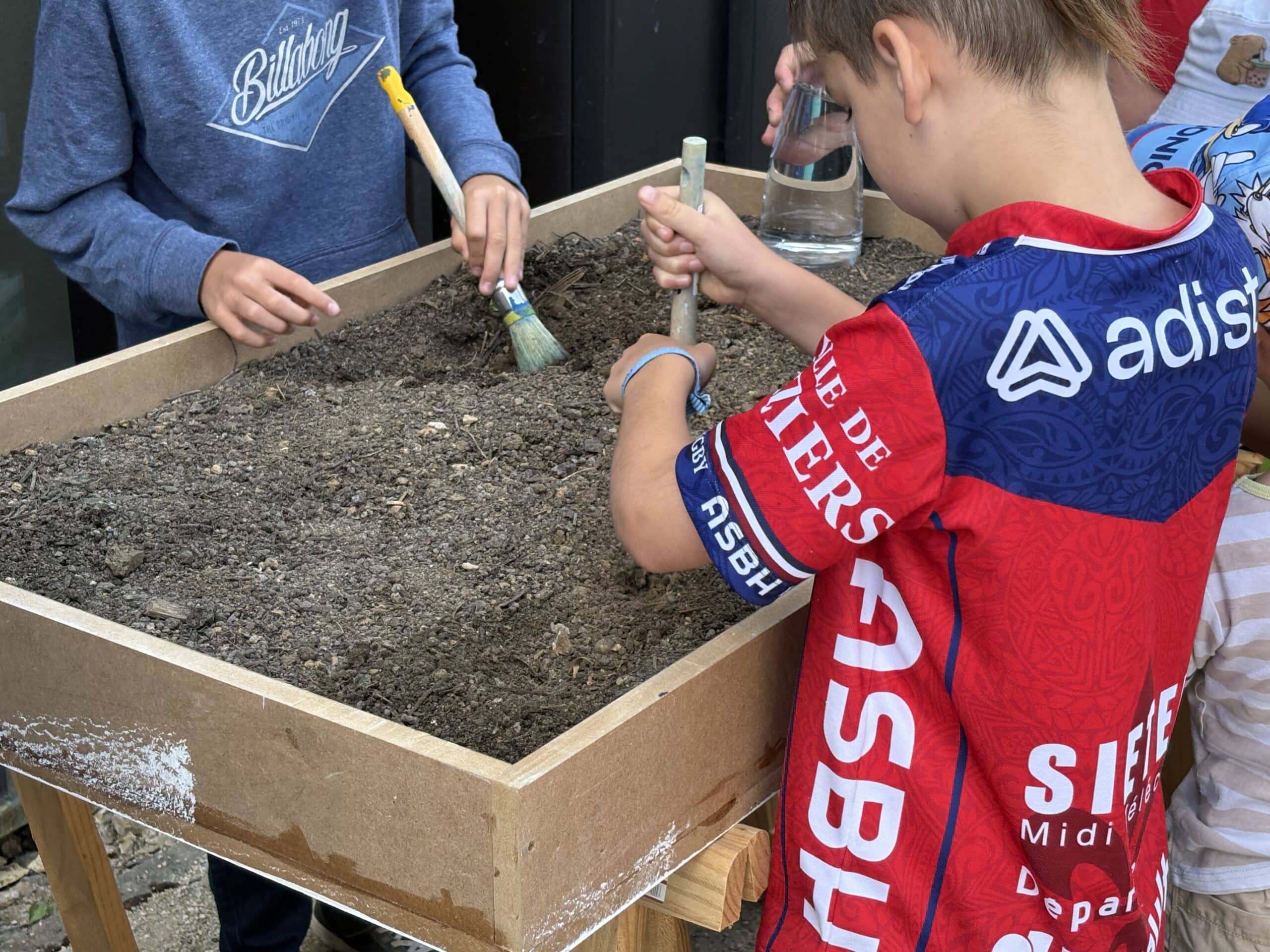
Archaeobox
Do you dare, after dark, to wander the corridors of the museum?
Border Game!
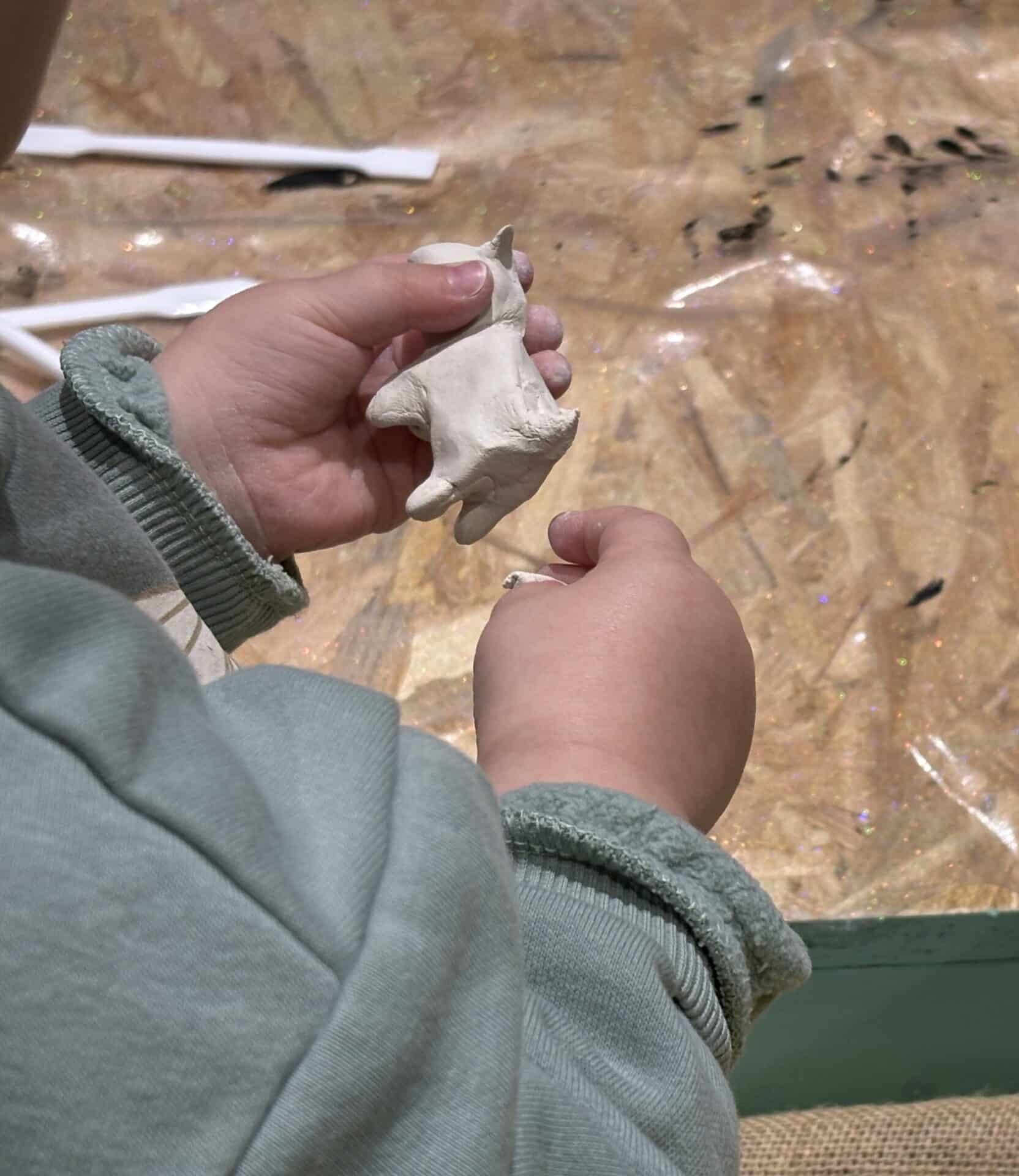
The little sculptors
Mad reserves: Associations
The museum of the little zouaves
Did you know?
Origin of the museum
Born from the desire to preserve the memory of the Franco-Prussian conflict of 1870, the first museum was created the day after the war, thanks to two people from Lorraine: Elisabeth Erpeldinger and her brother Viktor, who brought together numerous souvenirs and objects linked to the fighting many of which were picked up directly from the battlefield. Around 1875, they presented their important collection of objects in a specially constructed building, in the village of Gravelotte, near the battlefields: the Kriegsmuseum. The museum was bought in 1910 by the Association for the ornamentation and maintenance of tombs and monuments around Metz.
Upheavals
Marked by the successive conflicts of the First and Second World Wars, the museum and the war of 1870 gradually fell into oblivion, the building suffered heavy damage caused by bombings as well as fighting and it was also the victim of looting.
It was reborn in 1952 in a temporary premises thanks to the will of the association of friends of the Gravelotte Museum and French Souvenir, it was then installed in a new building in 1958 and recognized as a museum "controlled" by the Ministry of Culture. However, as the municipality did not have sufficient financial resources, the building and objects slowly deteriorated. He was the victim of theft as well as an attack in 1978, the collections became poorer.
In 1992, the Lorraine Regional Natural Park created an intercommunal union to enable the recruitment of a curator, responsible for the three controlled museums of the Park, including the military museum in Gravelotte.
Renaissance
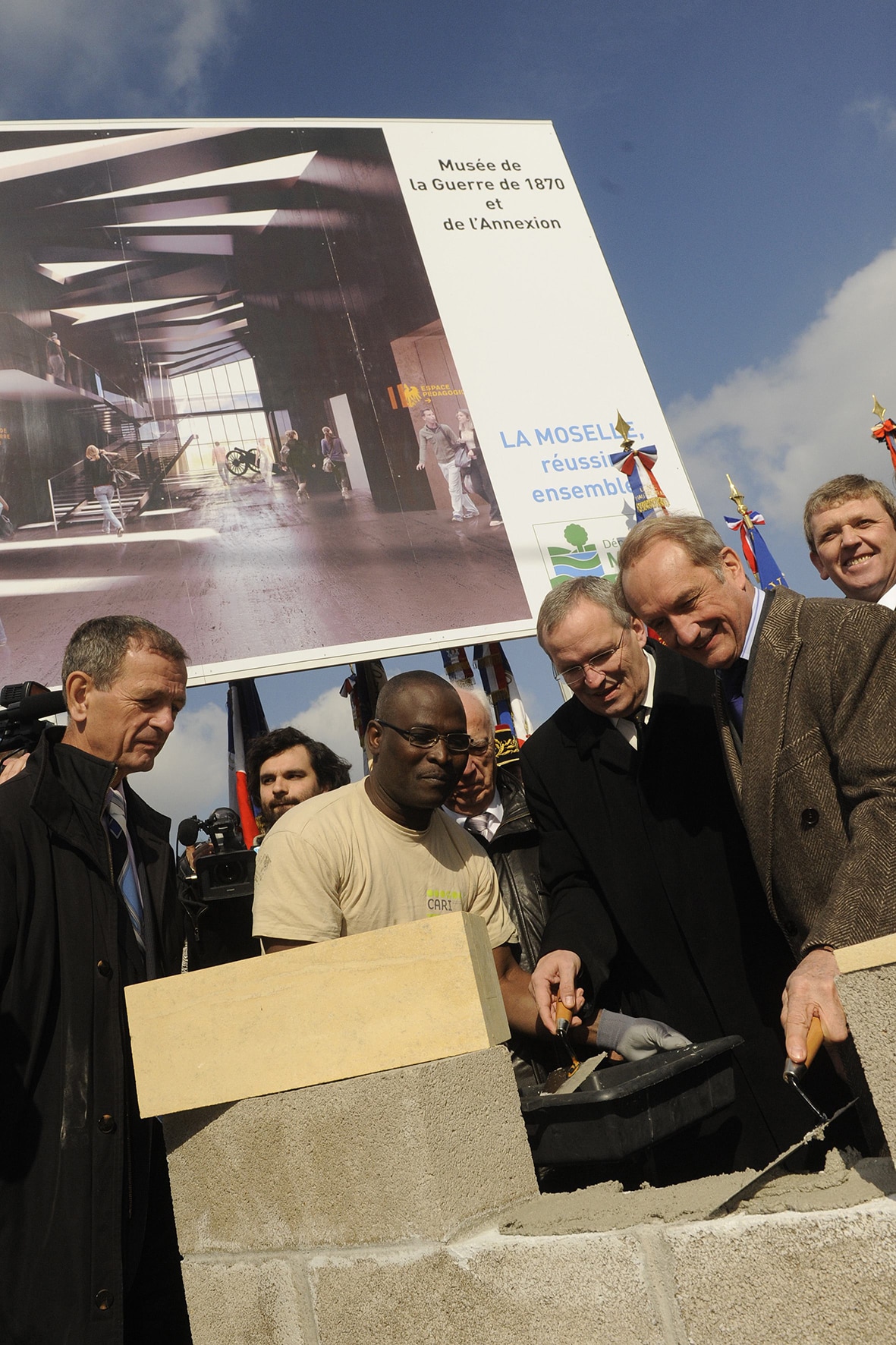
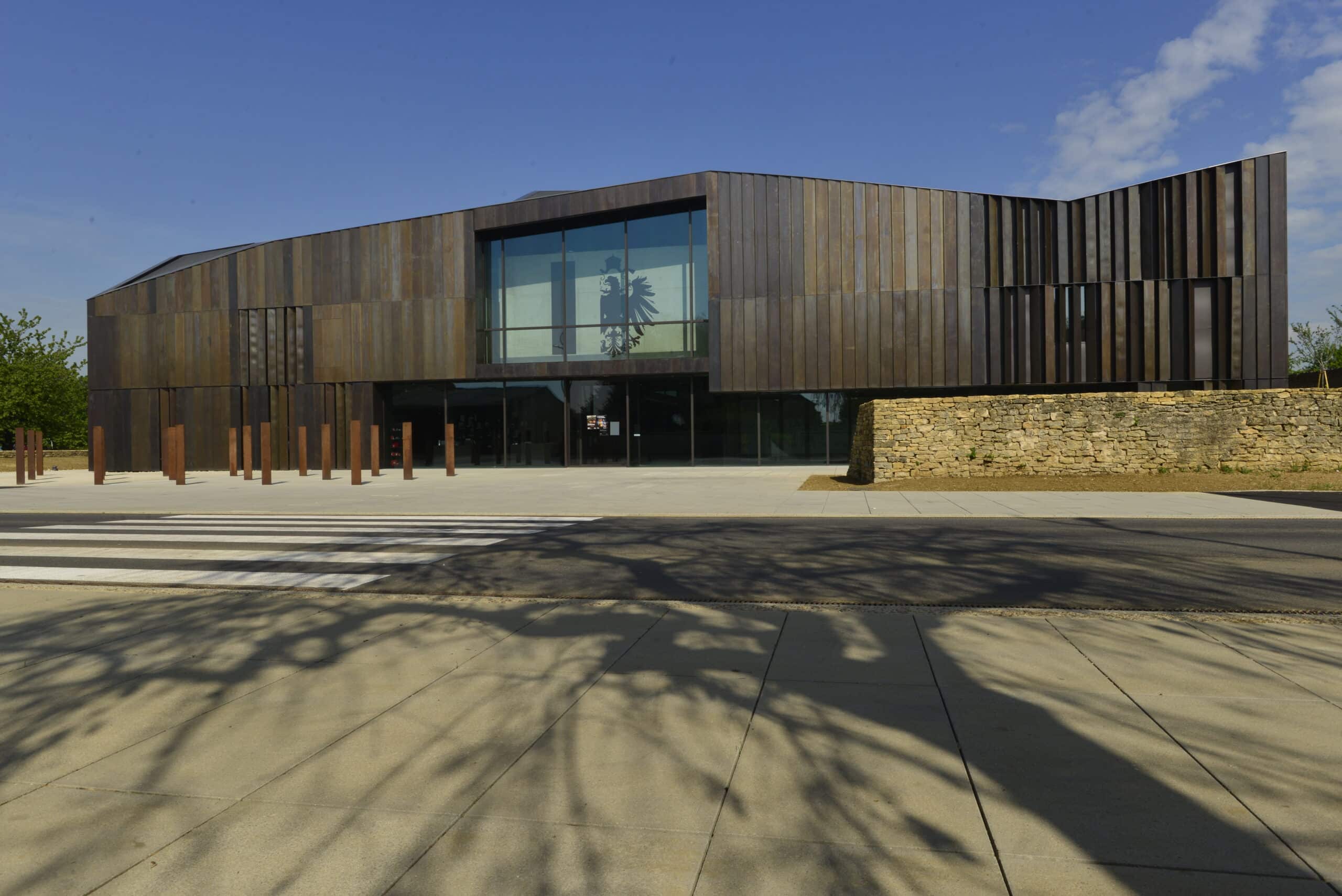
On March 31, 2000, collection management was transferred to the Department of Moselle. Noting the importance of the work, he then decided to permanently close the place to begin a new museographic project. A museum was then built, a few meters from the old one. Designed by architect Bruno Mader and redesigned by museographer Pierre Verger, it highlights, through innovative architecture, the various states and feelings linked to war: tensions, peace and hope. Its opening is celebrated in 2014.
Modern architecture at the service of memory
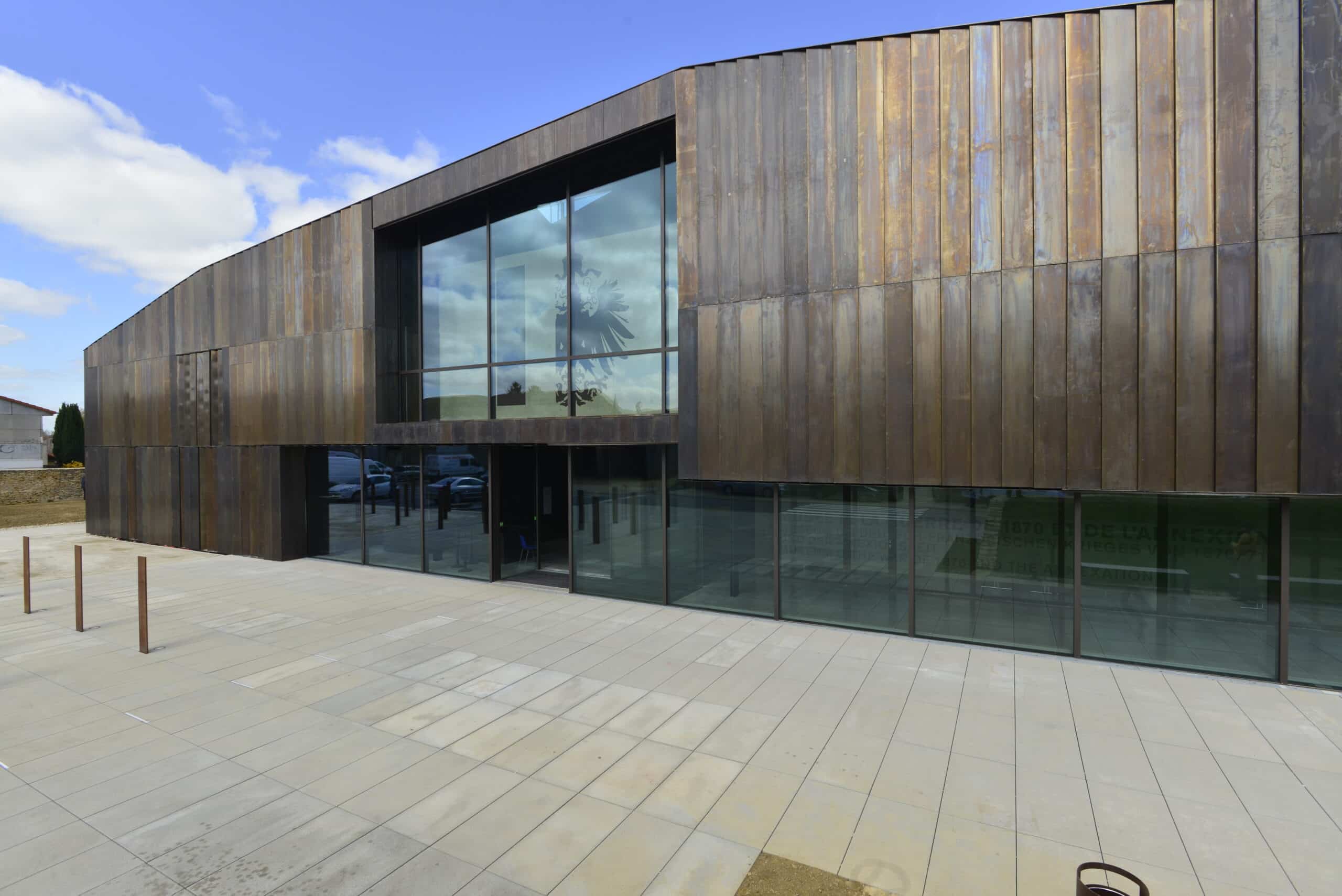
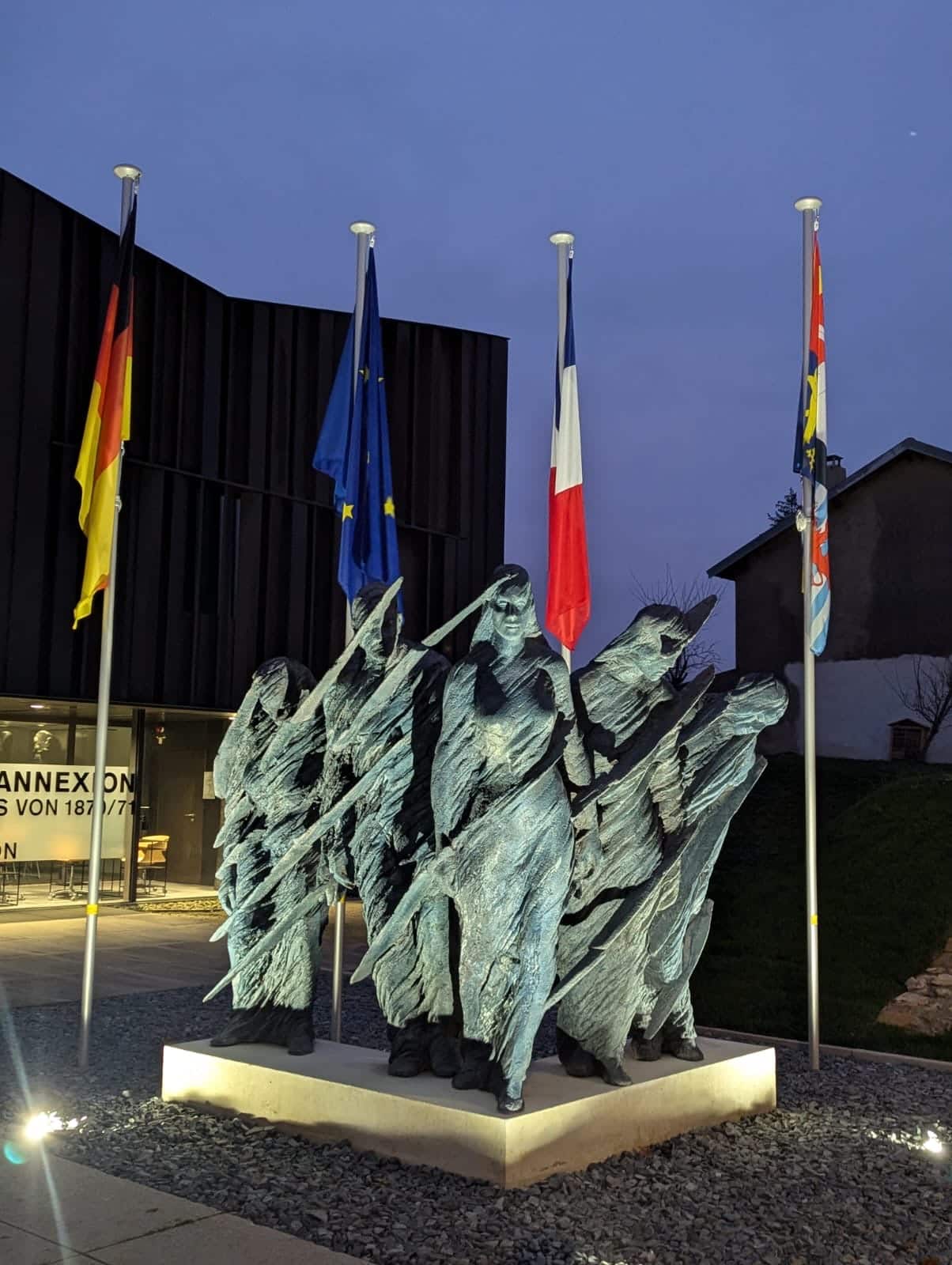
Located in the heart of the ancient battlefields of Gravelotte, the museum combines modernity and symbolism. Its architecture accompanies the visitor in an experience combining emotion, reflection and transmission. The building is distinguished by a monolithic shape in patinated metal, sober and powerful. Its undulating roof and sloping facades interact with the environment, while notches in the shape of steel slats create sheds which provide Nordic light. This silhouette evokes both the tensions of war and hope, suggested by a wide openness towards the countryside.
The patinated brass facades, evoking "gun barrel" steel, are gradually tinged with anthracite brown. The pivoting panels produce plays of light and shadow, enlivening the building and giving it movement and depth.
Entrance hall: a space between war and peace
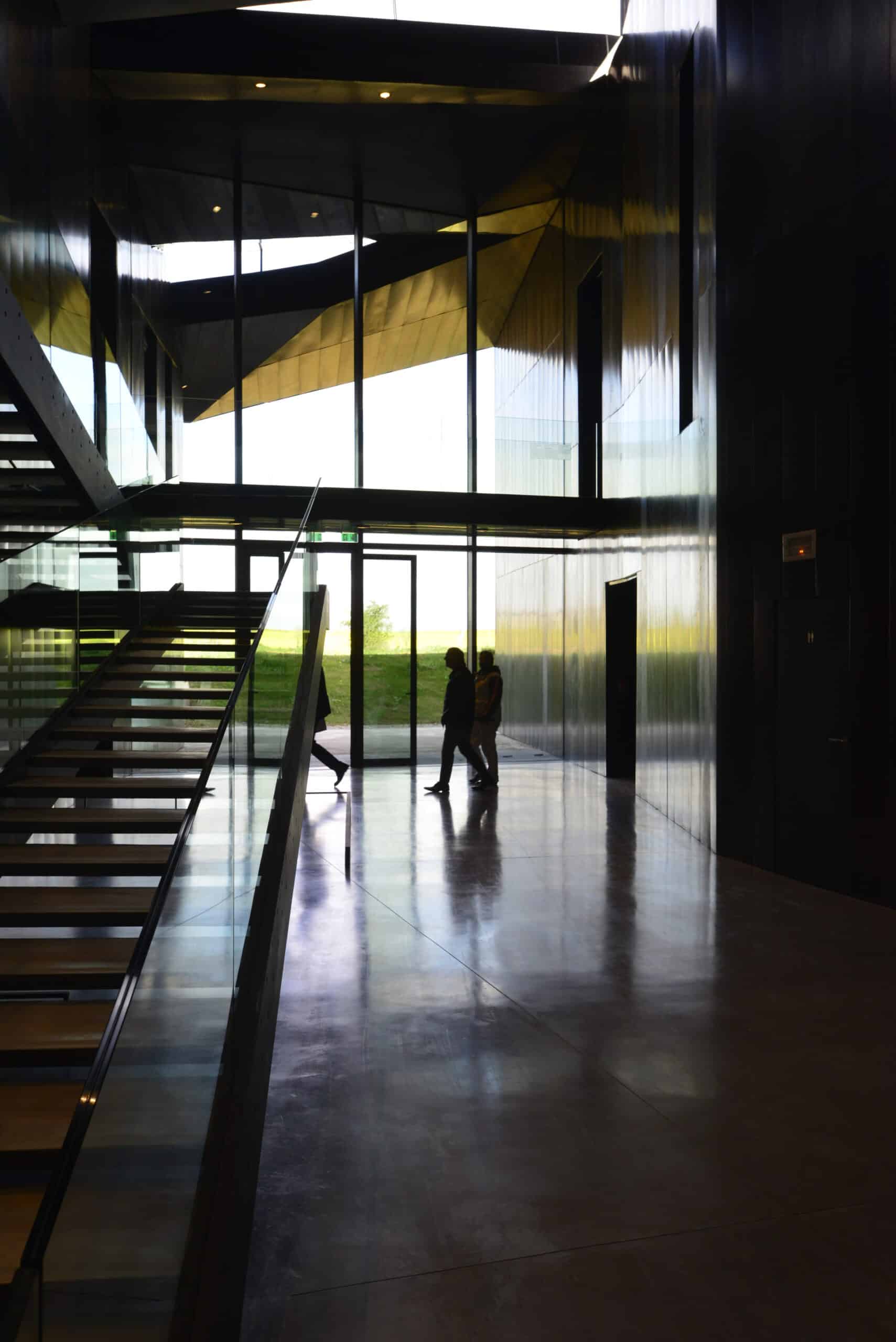
The entrance hall is the true heart of the museum. Designed in double height, it opens to natural light, creating an atmosphere between interior and exterior. This living space comes alive to the rhythm of visitors who pass through it at different levels. The dark and irregular walls as well as the notched roof recall what war, fracture and destruction represent, while the luminous breakthroughs evoke hope and newfound peace. From the outside, the hall constitutes a visual breakthrough, a call.
Dive into the heart of the conflict
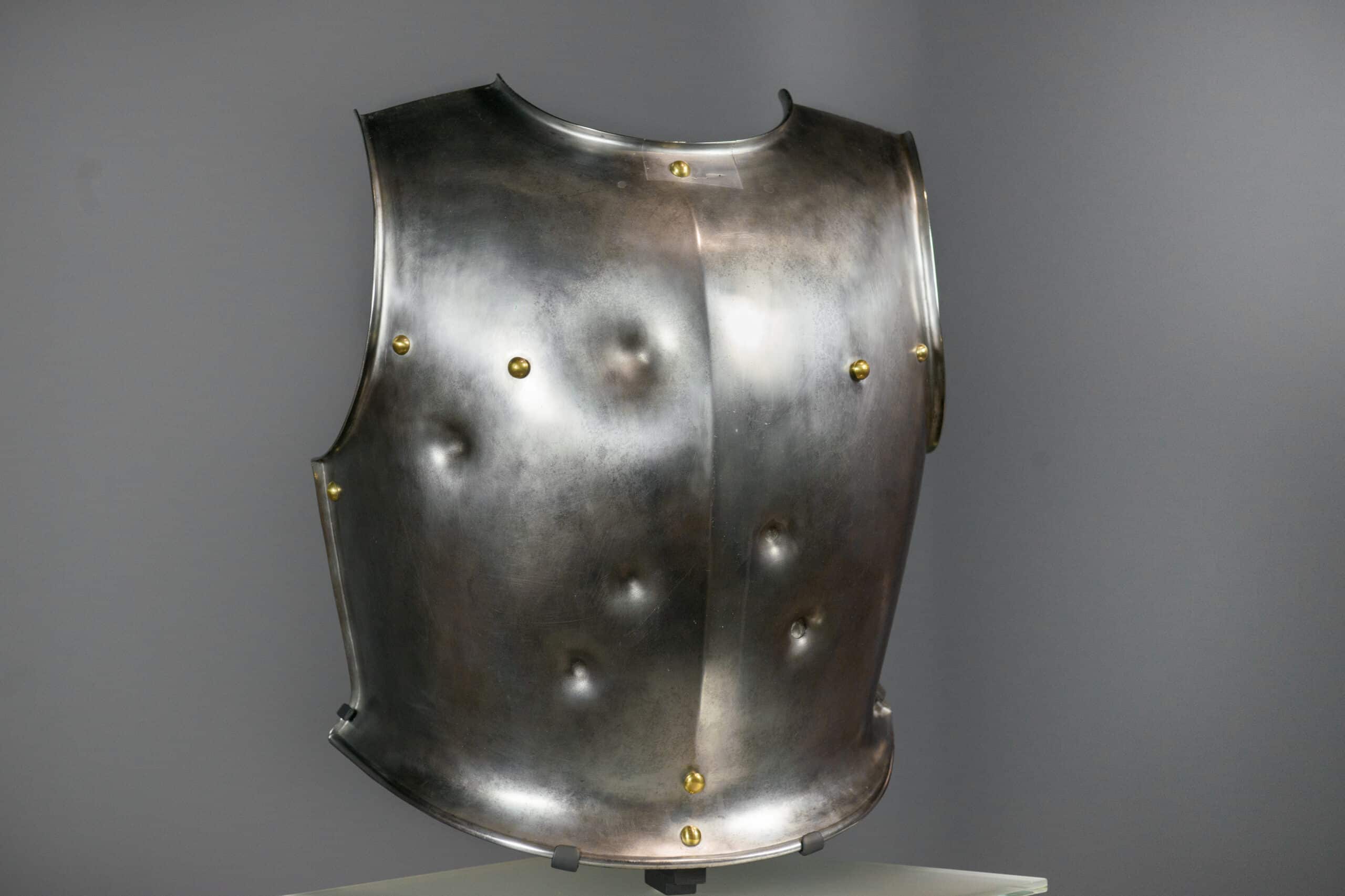
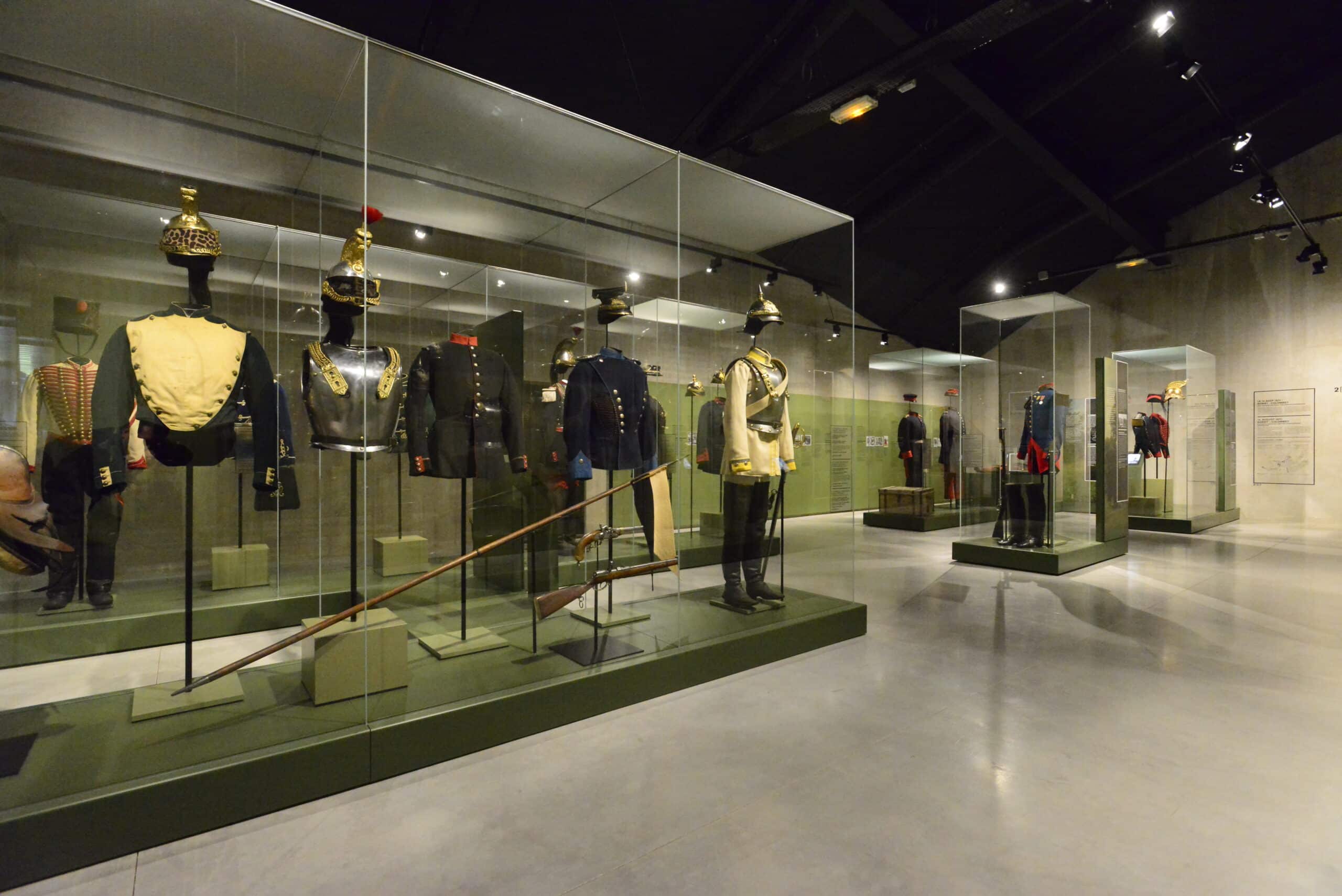
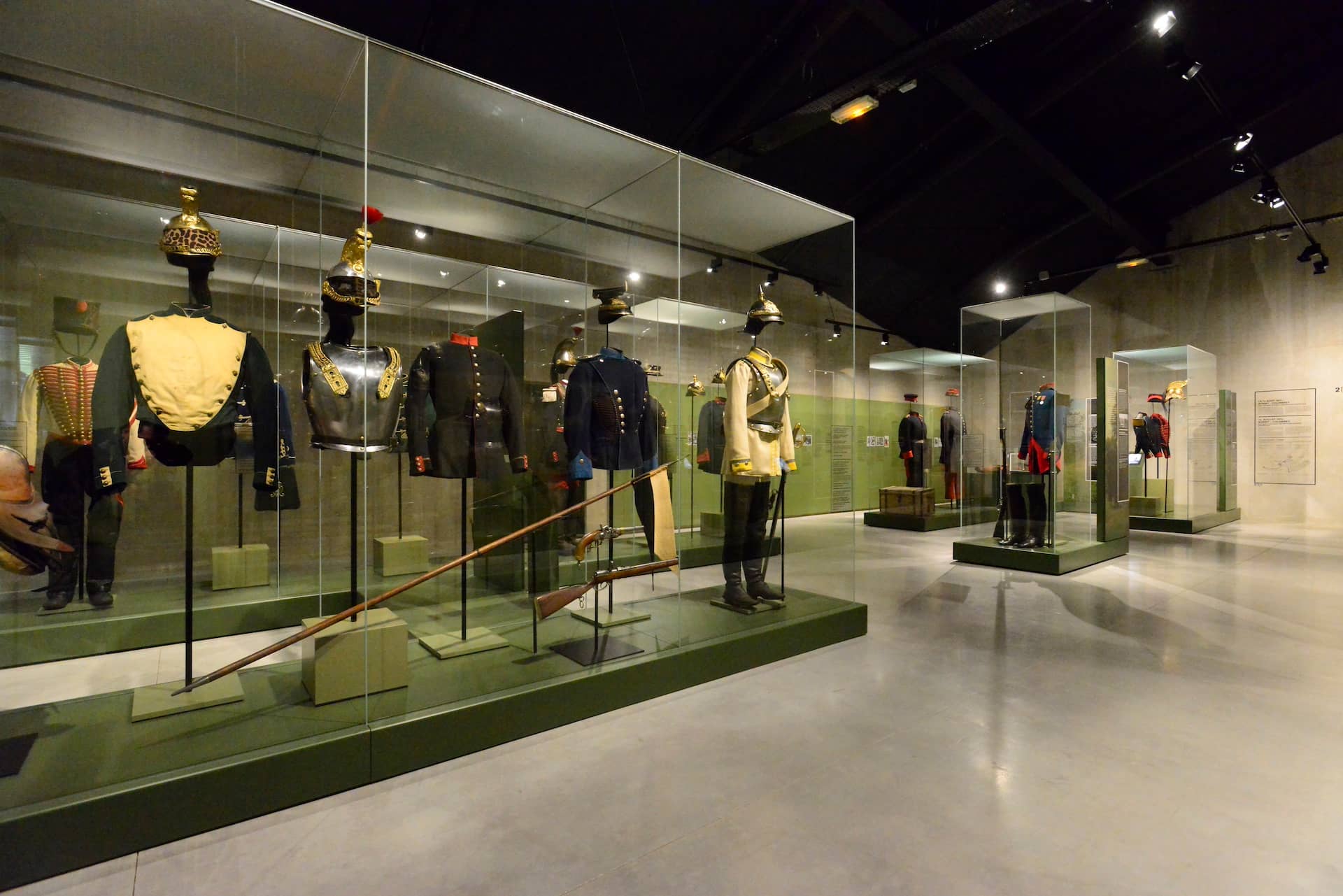
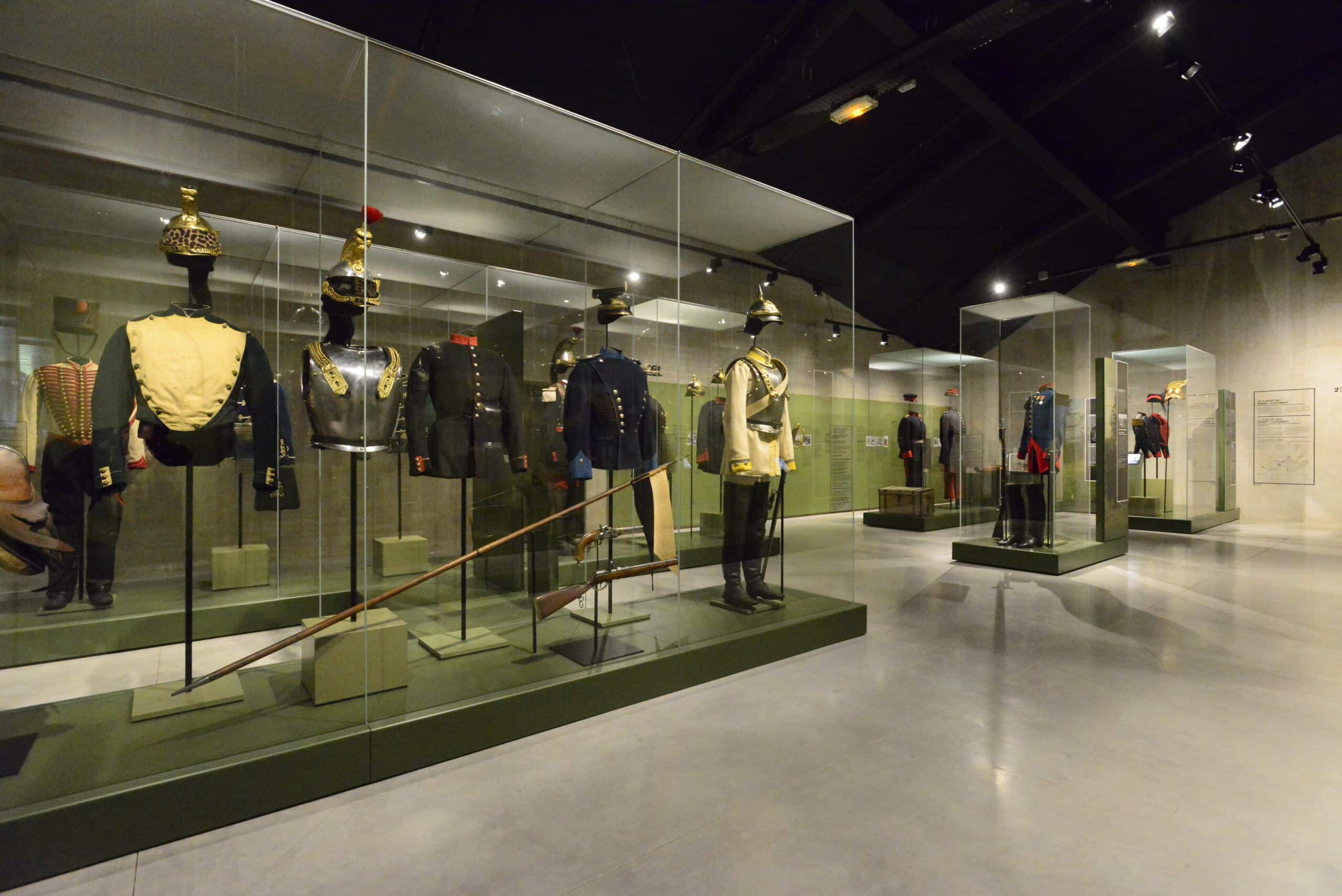
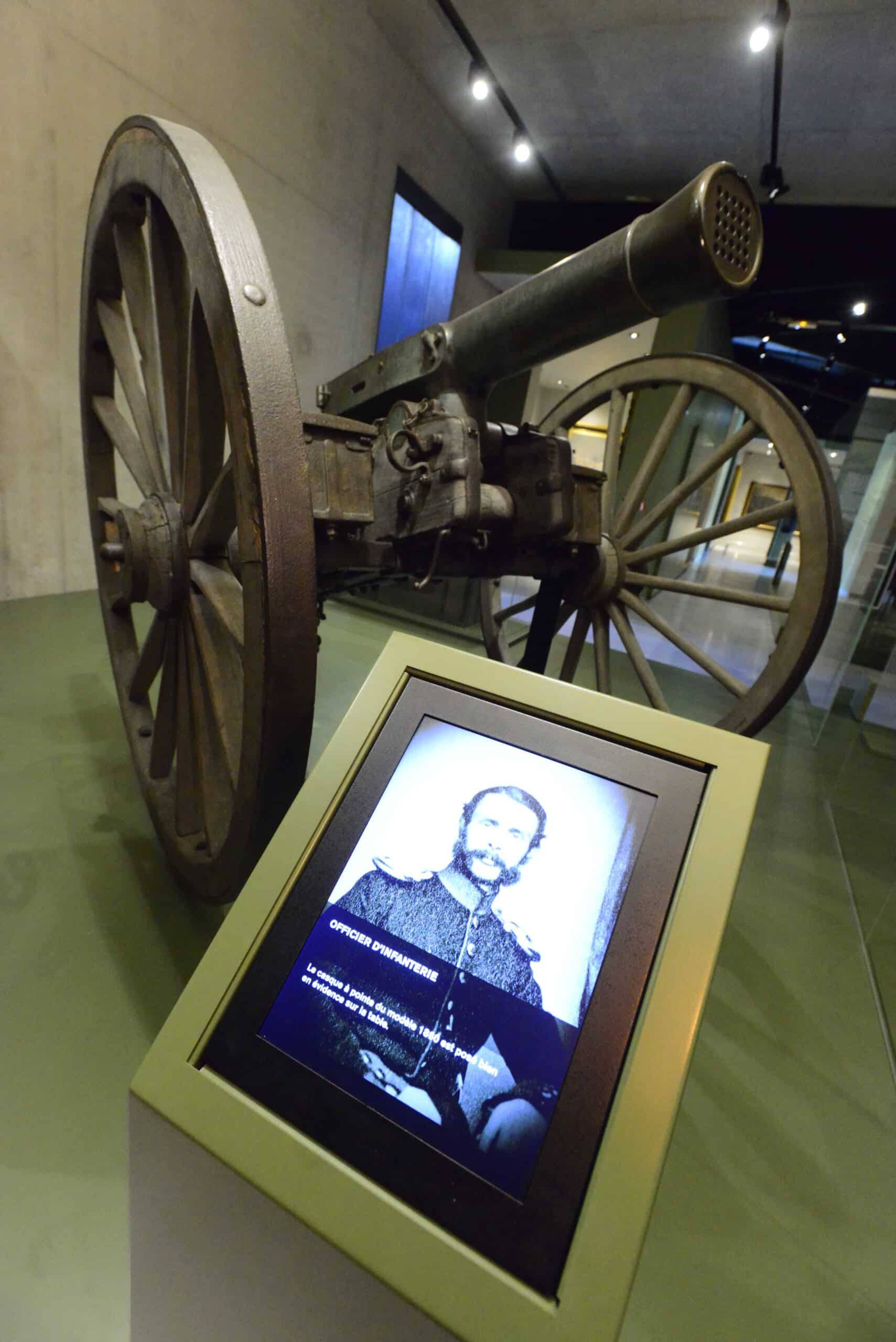
The permanent exhibition presents numerous military collections over 900 m2, but the spirit of this museum goes far beyond the War of 1870. It tells a story, that of the Mosellans, in the period around the Annexation until the end of the First World War. Through more than 6,000 objects – uniforms, weapons, works of art, documents, photographs and testimonies – the route highlights the violence of the fighting. From the first room, objects marked by fire and blood rub shoulders with the poems of Rimbaud and Freiligrath, making us feel the brutality of the conflict and the pain of men caught in the turmoil.
Throughout the battles
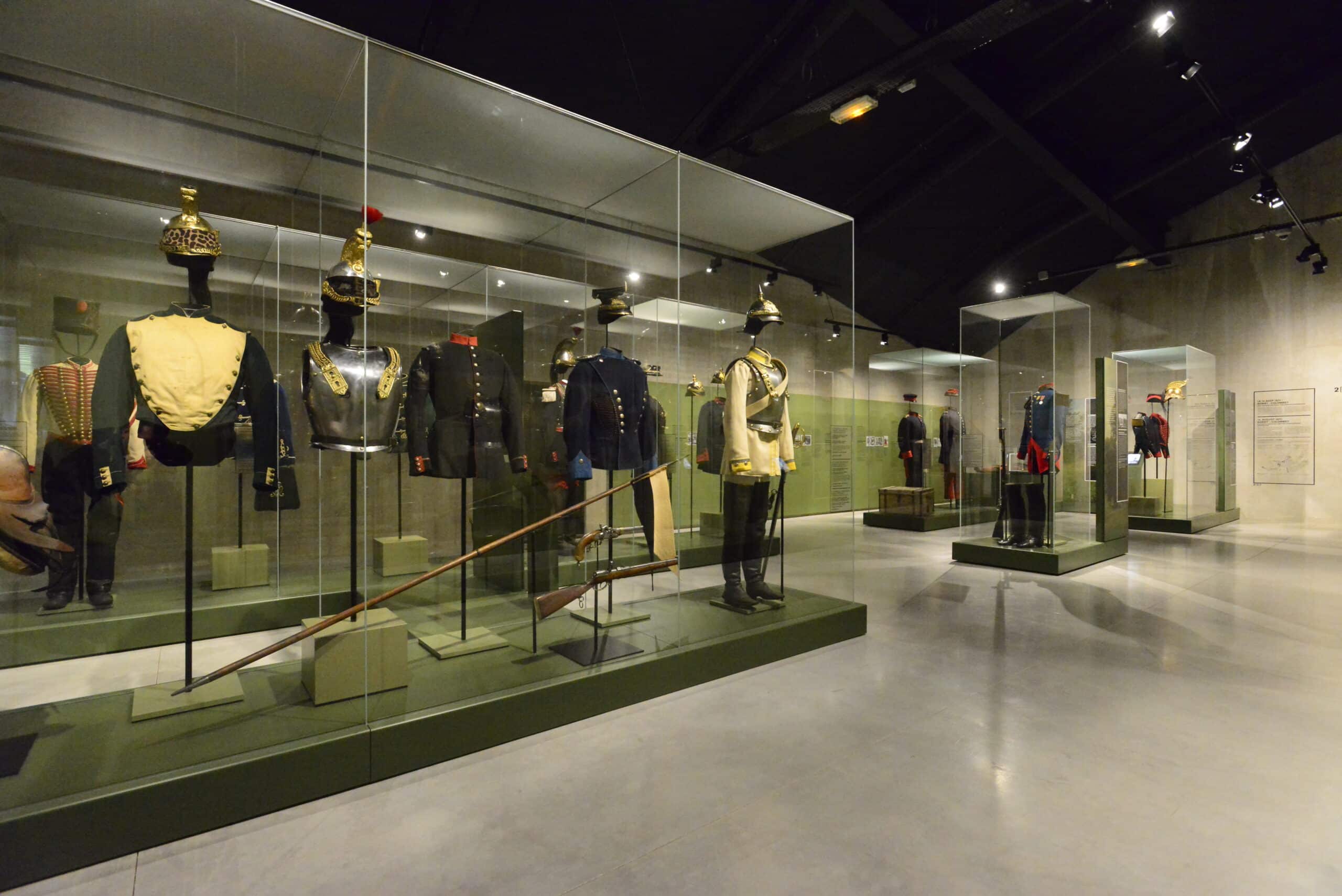
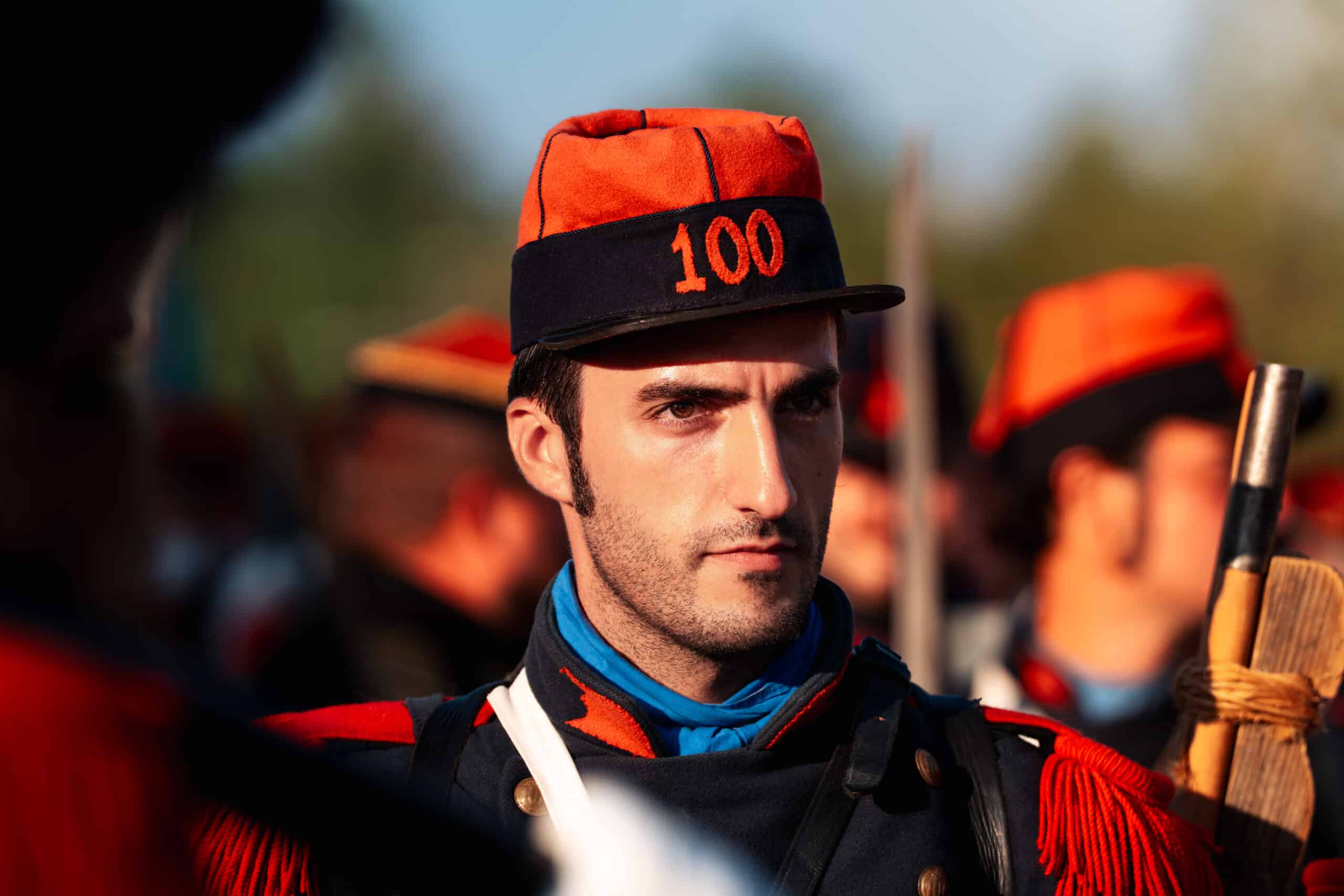
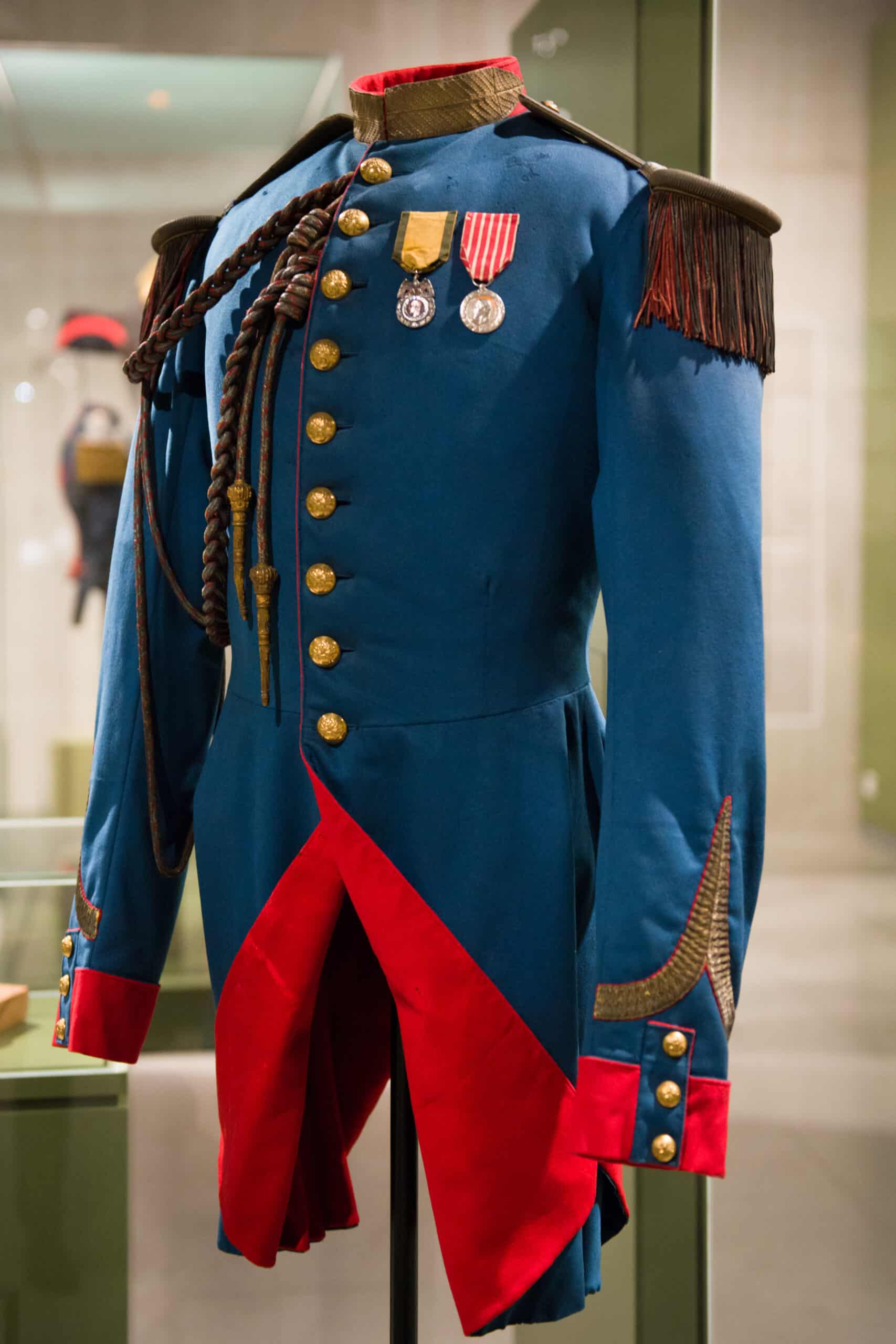
The visitor then follows the first battles of Alsace until the fall of the Second Empire and the signing of the Treaty of Frankfurt. The great battles of Borny, Rezonville-Mars-la-Tour and Gravelotte-Saint-Privat are told through maps, photographs and authentic uniforms, like that of General Decaen. The exhibition also evokes the siege of Metz, the defeat of Sedan and the consequences of the war: the annexation of Alsace and the Moselle and the birth of Reichsland. Daily life under the German administration, Germanization, but also the maintenance of Francophile sentiment, are presented through objects, films and reconstructions.
Remembrance and commemoration
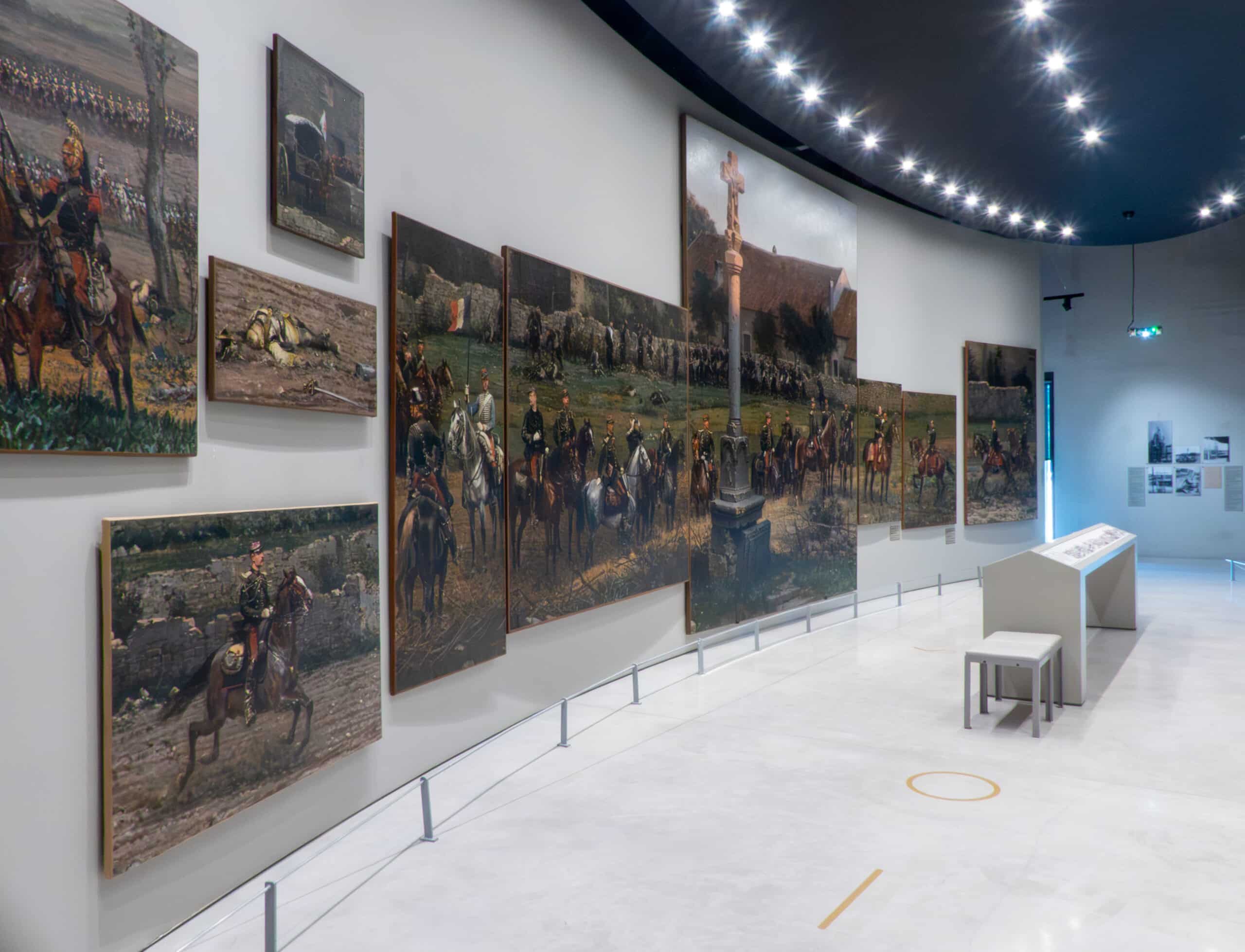
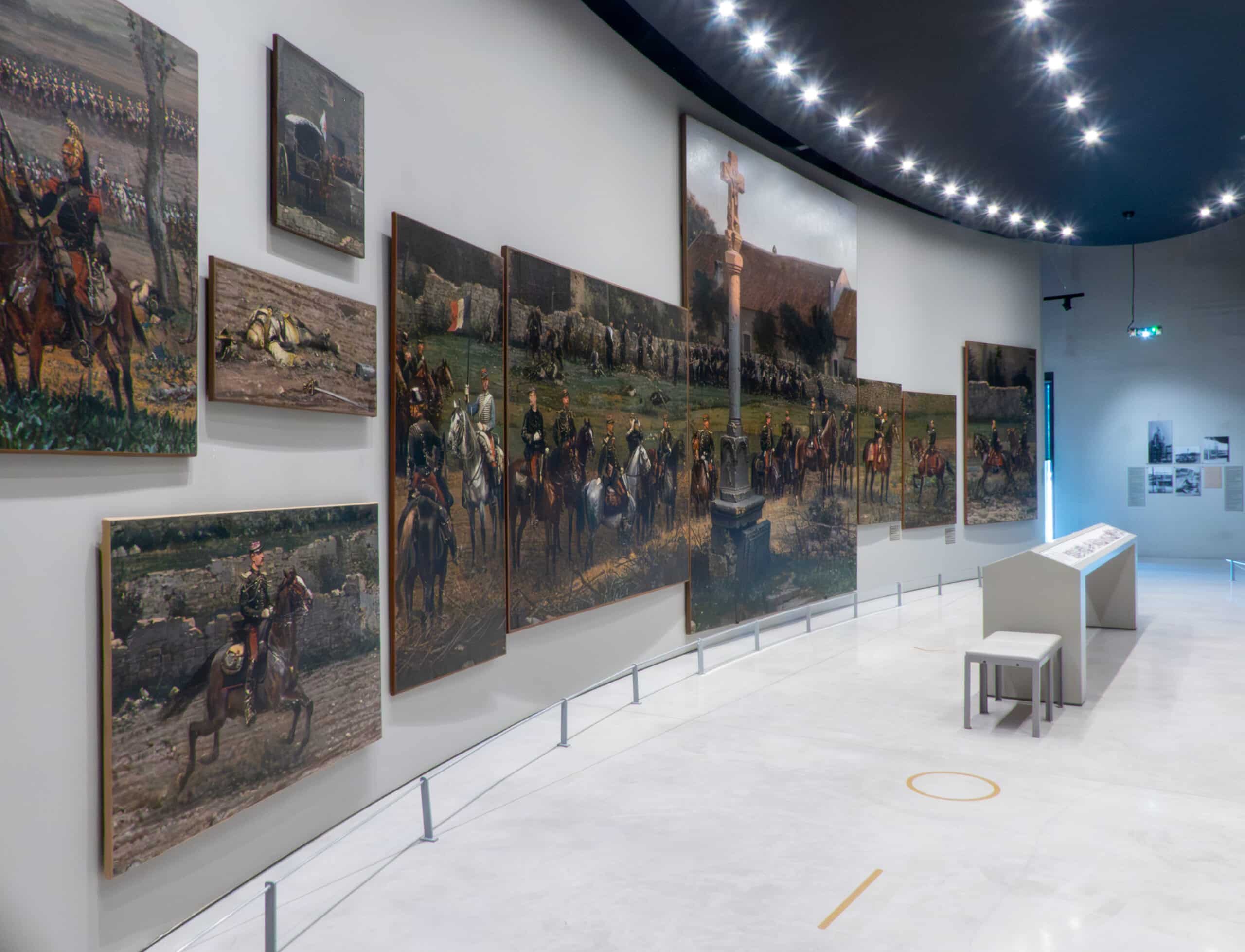
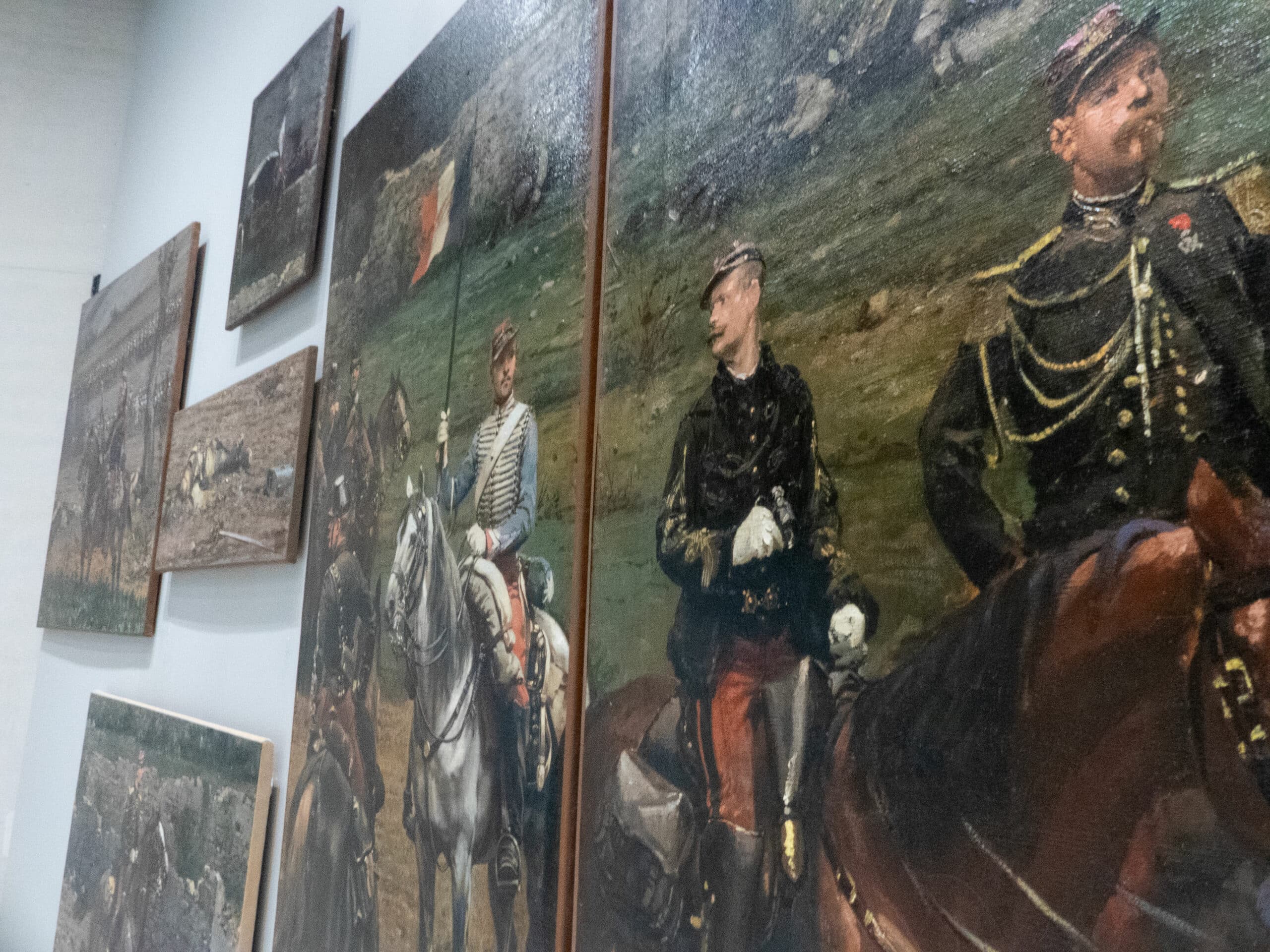
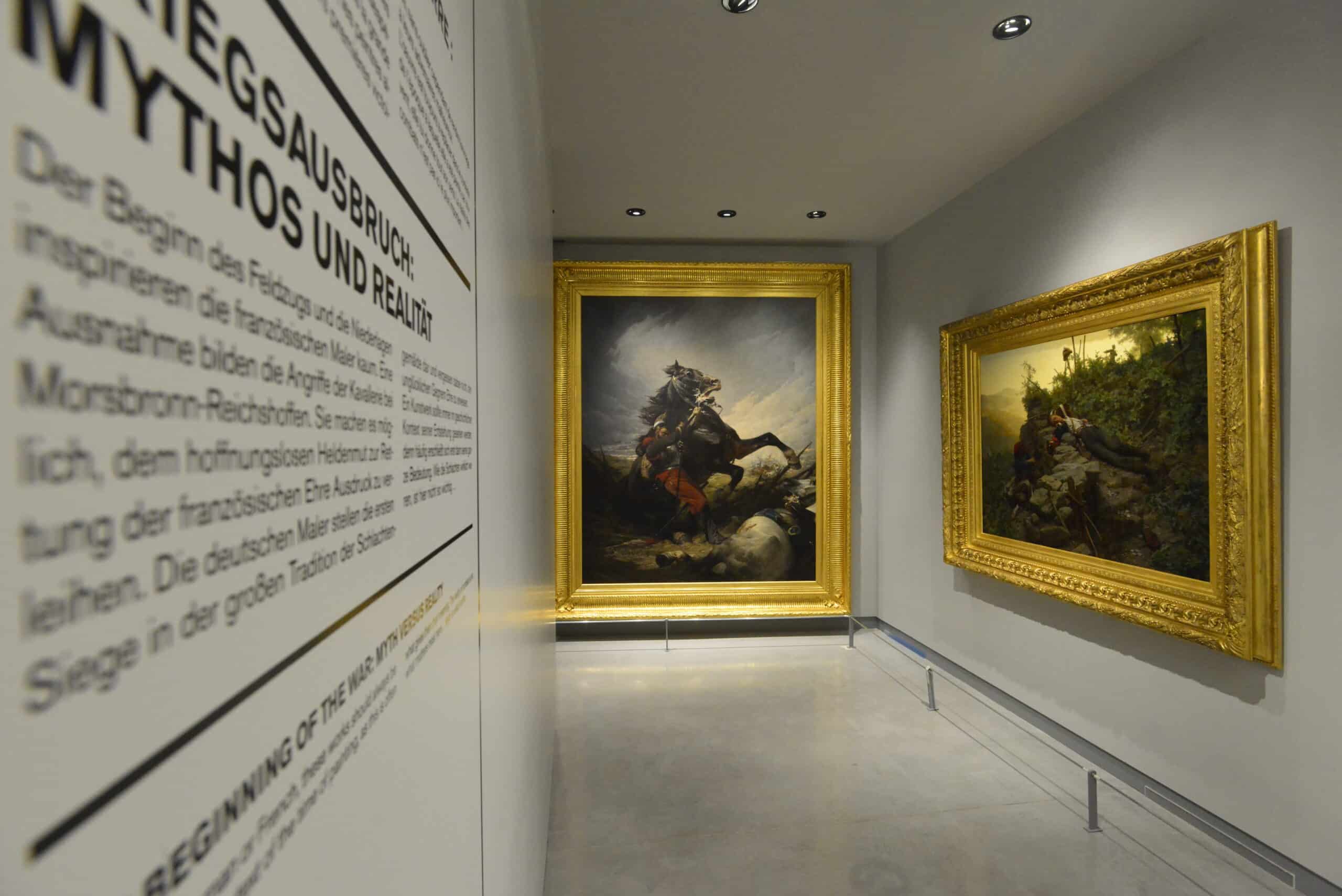
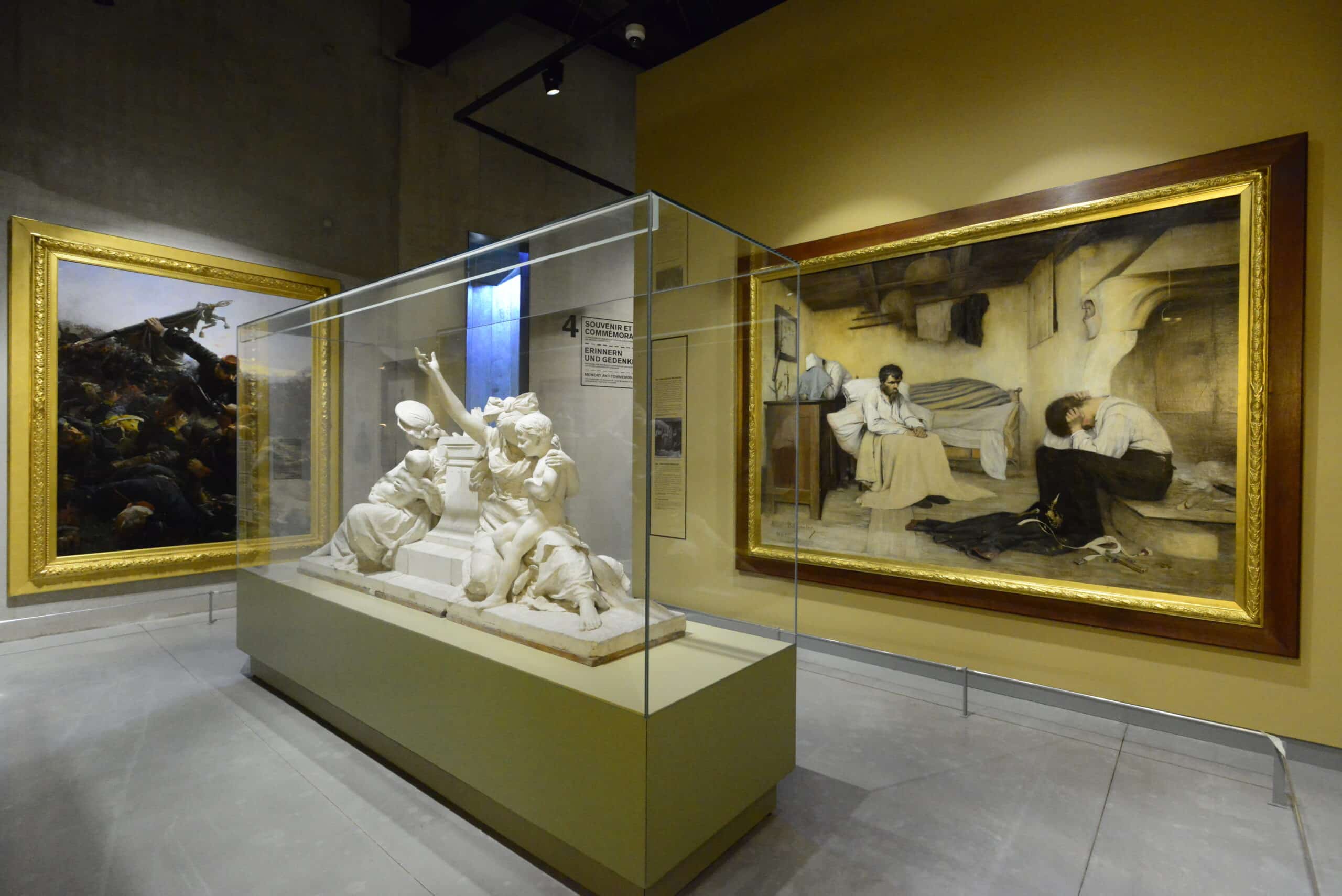
Finally, the last part of the route addresses the memory of the conflict, between commemorations, monuments and emblematic works of art, such as the fragments of the Panorama of Rezonville or the painting En Lorraine by Albert Bettannier. The museum thus invites a double reflection: on the war itself and on the way in which it lastingly shaped French and German identities until the First World War. More than a historical exhibition, it is a true immersion in a shared memory, made of wounds, memories and hope.
32,000 dead in Gravelotte
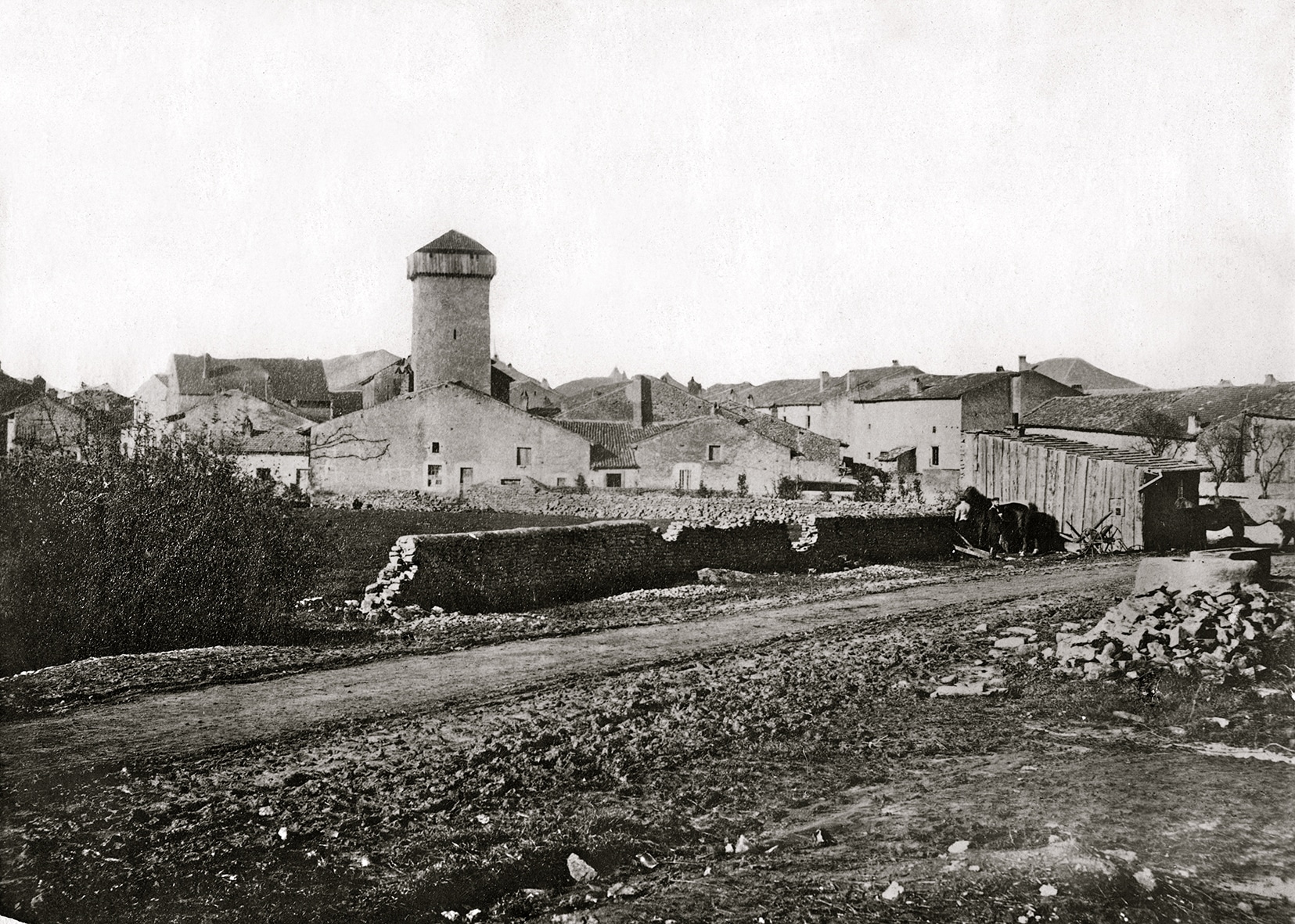
Napoleon III, despite illness, took charge of the French army mobilized near the Rhine, but defeats followed one another from the beginning of August 1870: Wissembourg, Frœschwiller and Spicheren. Forced to withdraw, he entrusted command to Marshal Bazaine, while von Moltke's Prussian troops advanced into Lorraine.
From August 14 to 18, several battles around Metz culminated with the Battle of Gravelotte. Bazaine committed around 113,000 soldiers there compared to 190,000 Prussians. More than 32,000 men, including General Decaen, died there. Outnumbered, the French retreated towards Metz, which was quickly besieged.
These exceptionally violent clashes left nearly 75,000 dead in a few days. Prussia definitely takes the advantage, leaving bloodless France and its army in an impasse from which it will not recover.
Capitulation and Treaty of Frankfurt
In Metz, soldiers and civilians suffered a long and difficult siege, marked by famine. Meanwhile, Napoleon III attempted to advance towards Châlons to intercept the German armies, but he was finally confronted by the enemy at Sedan on September 1 and 2, 1870. The fighting was violent and the French, overwhelmed by Prussian power, could not win. On September 2, Napoleon III capitulated, leading to the fall of the Second Empire and the proclamation of the Republic.
A "national defense" government was formed to continue the war, but the French army suffered further defeats. In Metz, Bazaine capitulated on October 29, an act perceived as treason. The war ended with the armistice of January 28, 1871, followed by the signing of the Treaty of Frankfurt on May 10, 1871, which formalized the annexation of Alsace and Moselle by Germany.
An expression still used today
The expression "It falls like Gravelotte", today used in French popular culture to describe heavy rain, is actually infamous. It bears witness to the violence of the war of 1870. In Gravelotte, on the day of August 16 alone, there were around 32,000 dead, injured or missing. Nearly 75,000 were killed for all the fighting from August 14 to 18, 1870.
Reichsland
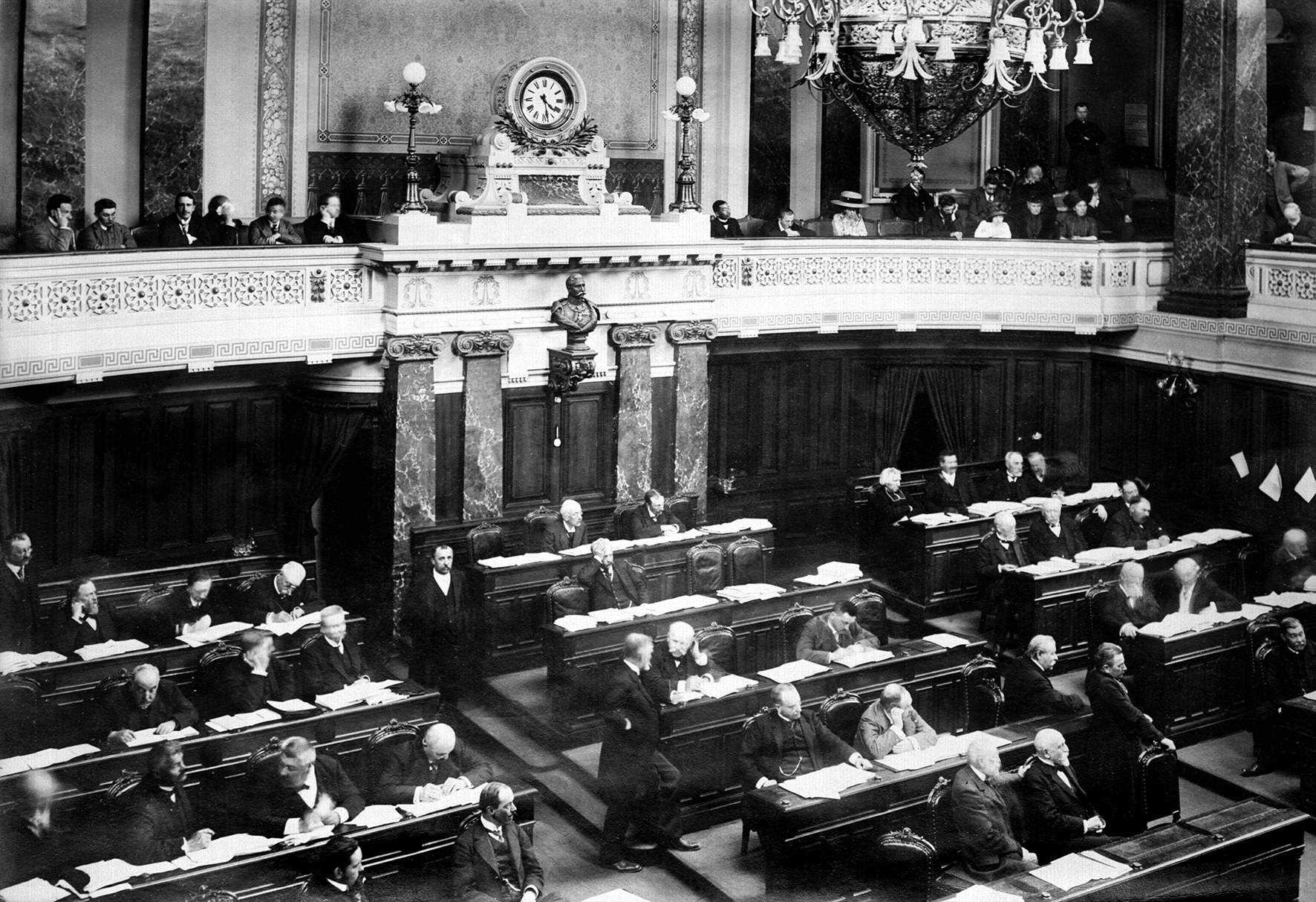
Part of the museum's permanent exhibition deals with Reichsland and the Germanization of annexed populations, as well as daily life in Alsace and Moselle during this period.
The Treaty of Frankfurt of May 10, 1871 ceded Alsace and Moselle to Germany, which made it the Reichsland of Alsace-Lorraine, placed under the authority of Berlin for 48 years. The shock is immense: residents must choose their nationality, and around 120,000 opt for France and go into exile.
Germany then undertook to transform the region politically, economically and culturally: administration, school and army switched to German time, Strasbourg became a modernized imperial capital, and the economy developed thanks to large investments. Despite this, a Francophile feeling persists.
World War I imposed martial law and strict military authority. The annexation ended with the armistice of November 11, 1918. These 48 years have had a lasting impact on the territory, they are still visible today in local law, town planning and architecture.
The Hall of Remembrance
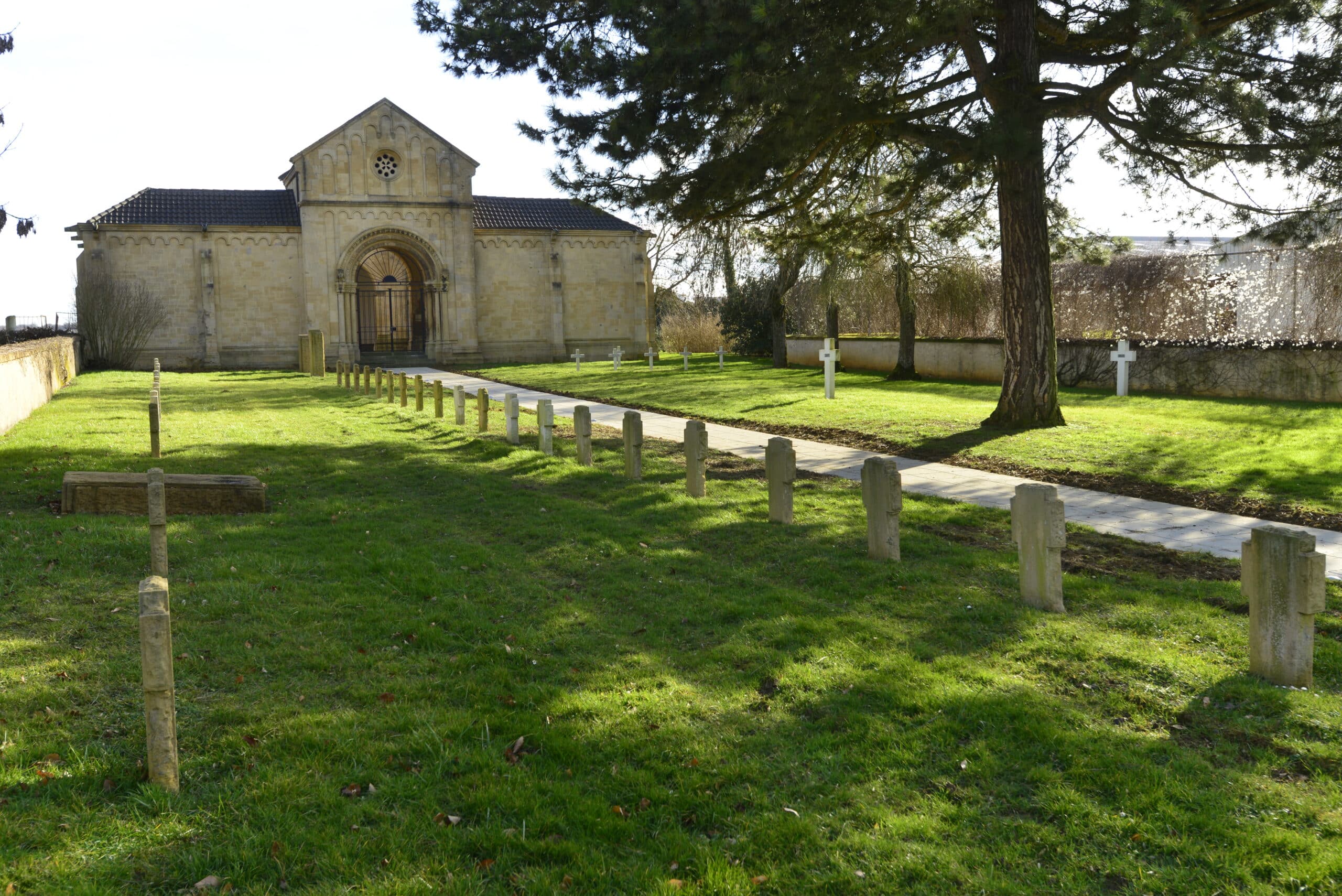
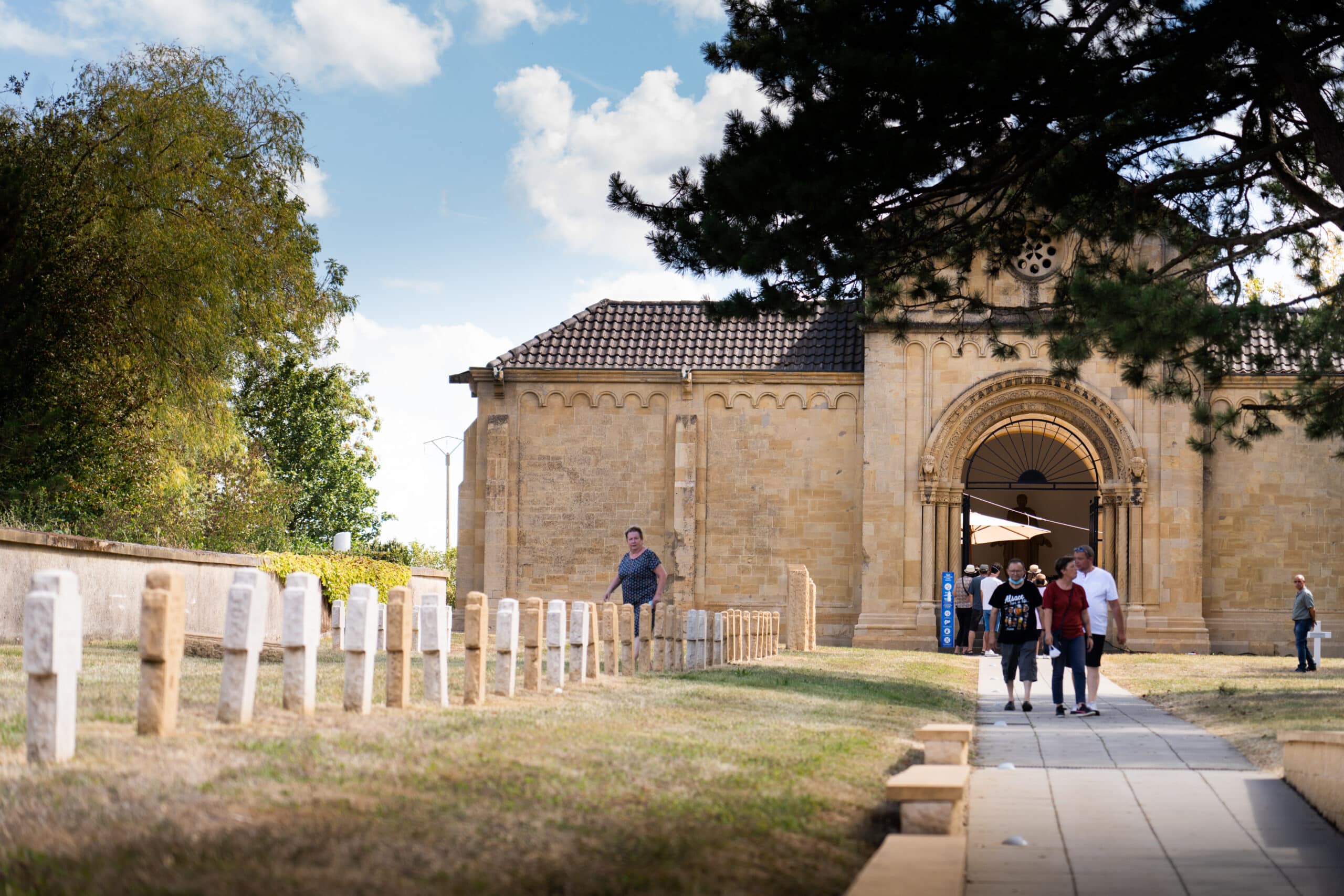
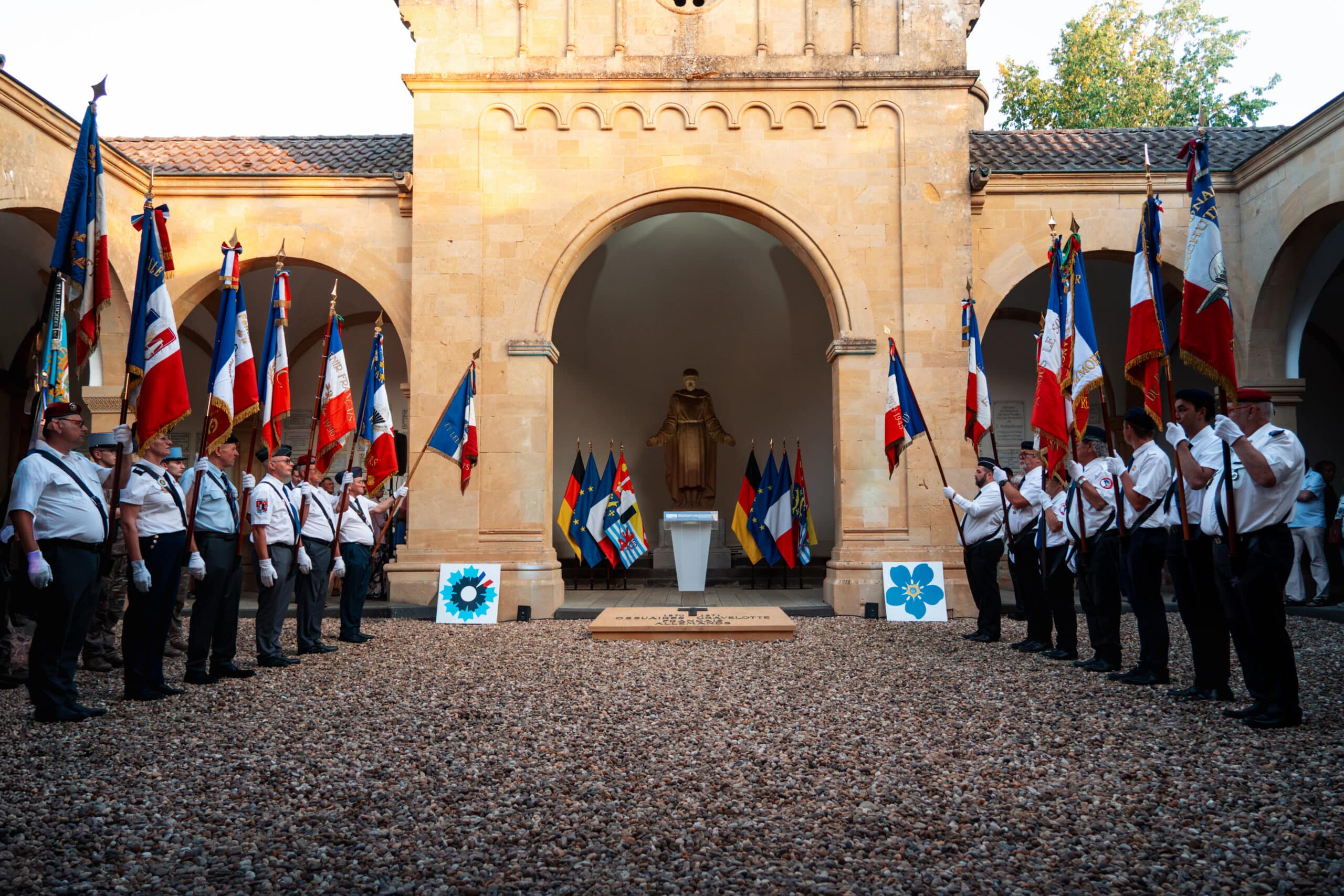
The Gravelotte countryside, scene of the fighting of 1870, still houses numerous commemorative monuments. The most important is the Hall of Remembrance, in Jaumont stone, designed by the architect Hermann Albrecht. Inaugurated on May 11, 1905 by William II, it evokes a cloister and once housed a bronze statue of more than three meters, the Angel of the Resurrection, which has now disappeared.
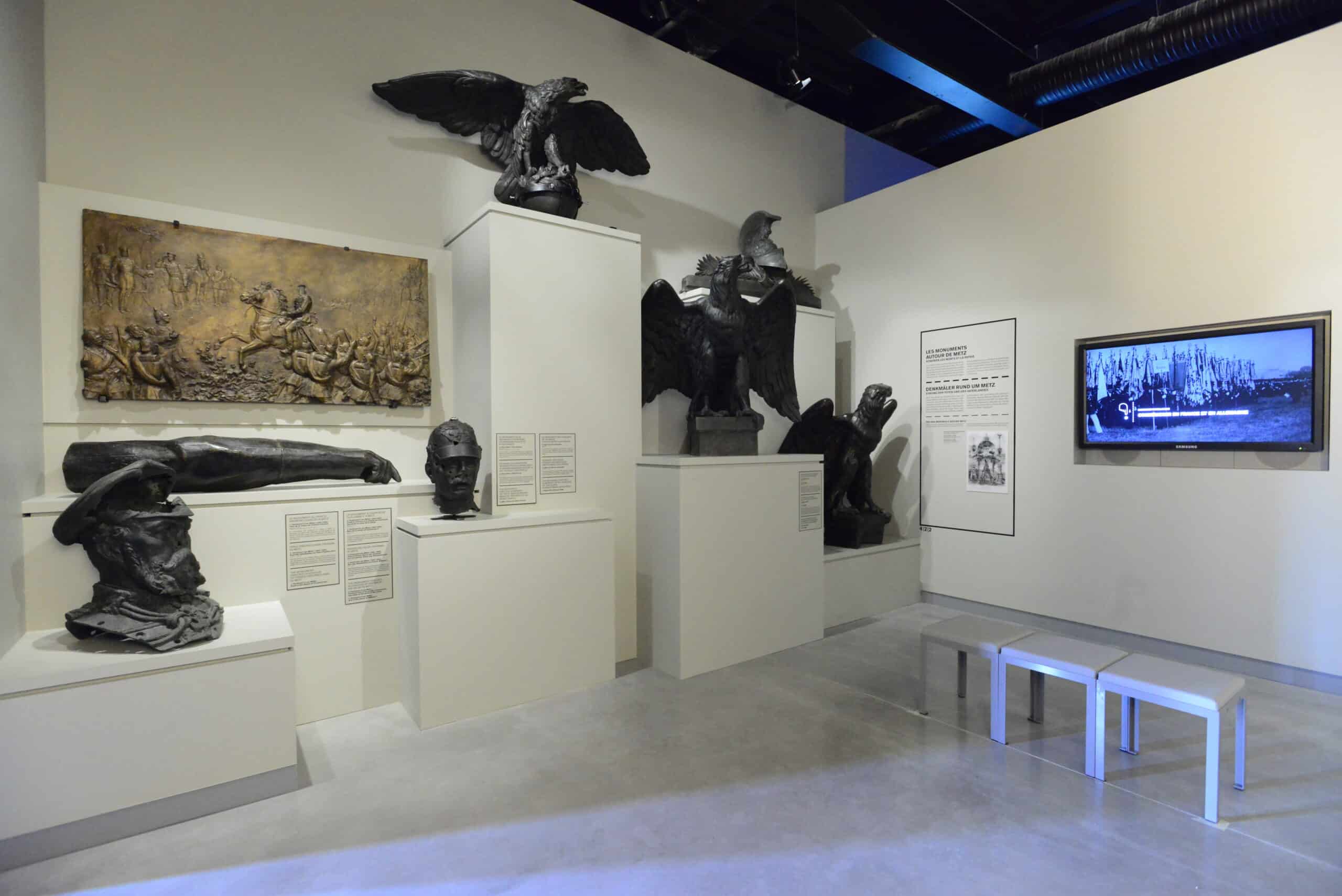
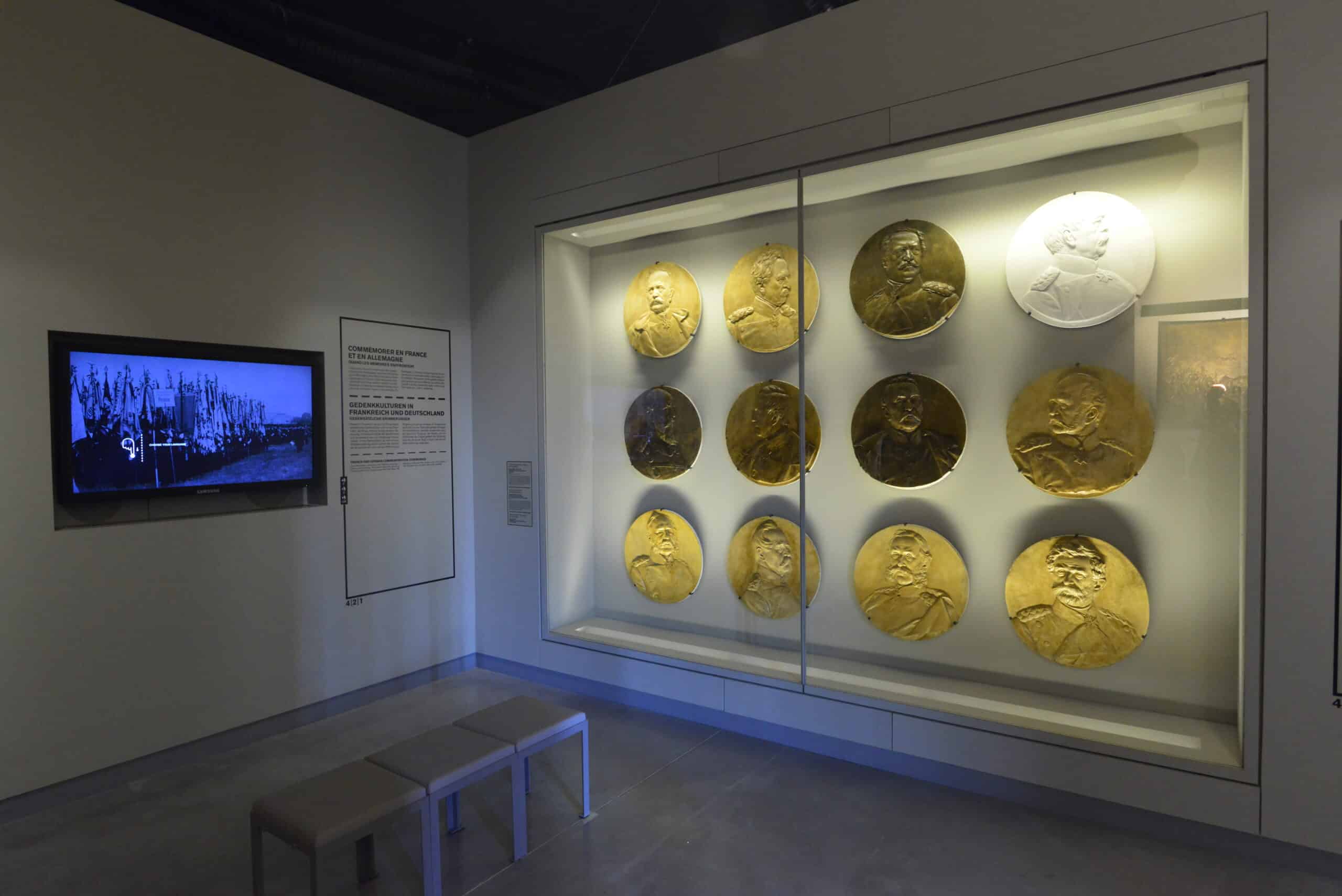
The Hall also housed busts of William I and Prince Frederick Charles, as well as medallions of German military leaders destroyed in 1918. The museum, however, preserves the plasters.
The military cemetery brings together French and German tombs, as well as various monuments from the battlefields. If vestiges of the war of 1870 exist in many departments, they are particularly numerous in the east, where the clashes were concentrated.
In pictures

Full price 7€
Reduced price 5€
Free – 12 years old and people with reduced mobility and their accompanying person.
February 7 to December 13
Tuesday to Sunday and public holidays: 10 a.m. to 1 p.m. – 2 p.m. to 6 p.m
(Closed Mondays and May 1)